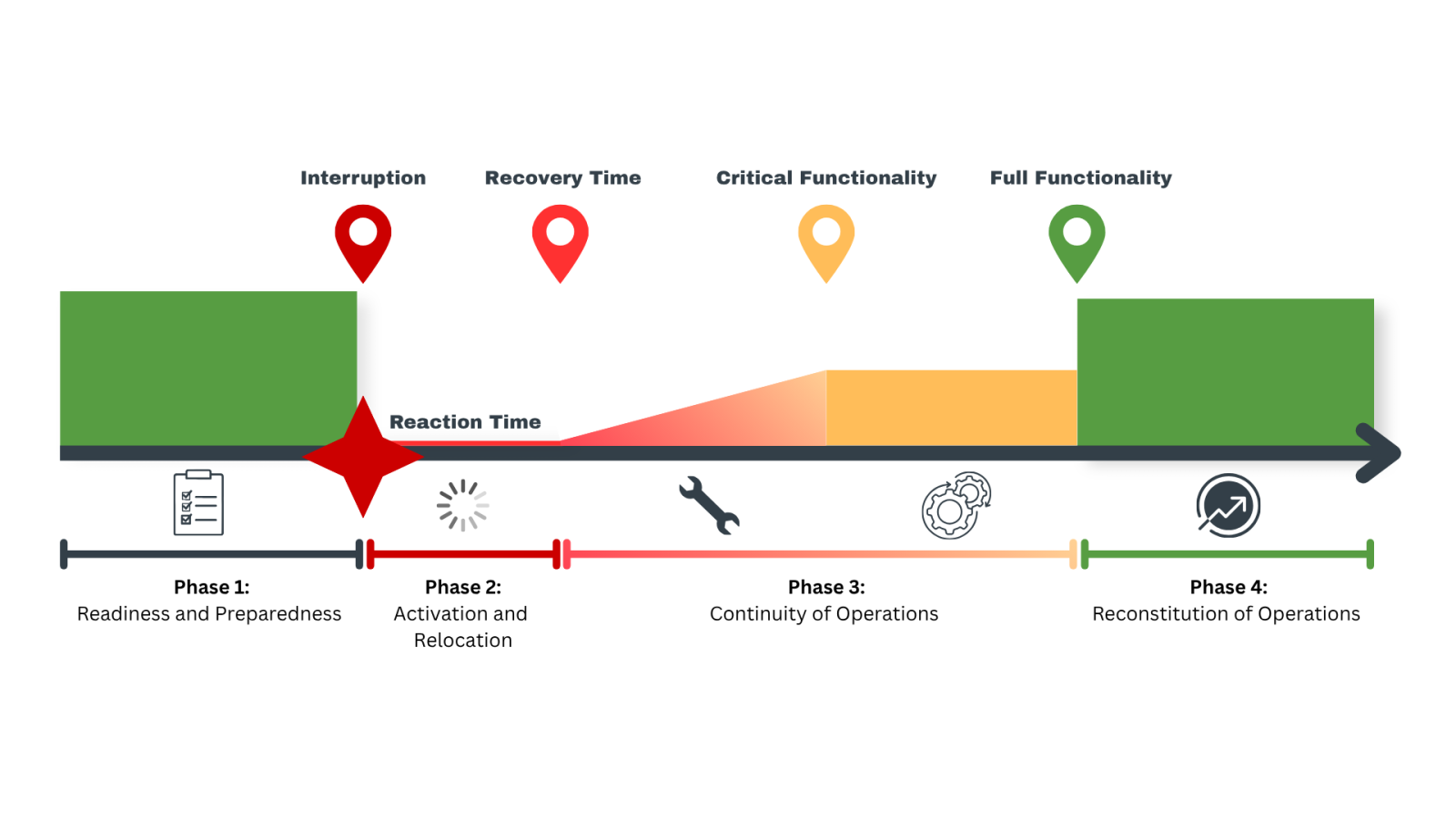
Business continuity planning is broken into four phases:
- Readiness and Preparedness
- Activation and Relocation
- Continuity of Operations
- Reconstitution of Operations
These four phases encompass the entire business continuity cycle, through planning, activation, and reconstitution.
Readiness and Preparedness
The first phase is based around planning and mitigation efforts. This involves documenting an organization’s critical functions, identifying the impact on campus if those functions are interrupted, and strategizing recovery plans to recover those functions following an interruption.
Activation and Relocation
Phase Two begins upon notification of a major interruption to critical functions or services. This is where the university and its colleges/schools/units activate their respective plans. Relocation refers to the potential need to move critical functions to alternate worksites, or transition operations into a virtual capacity if possible. Relocation needs and capabilities are documented in the Readiness and Preparedness phase.
Continuity of Operations
The Continuity of Operations phase is where business continuity plans take full effect. Staff and leadership assess the impact on their critical functions and begin implementing recovery efforts to restore critical functionality. During this phase, departments will not be operating at full capacity, and they may not utilize their complete staffing. The university and departments will restore only those functions that MUST continue.
Reconstitution of Operations
Once the mid-to-long-term impacts of the interruption have been fully addressed, the university and its departments may begin Phase Four. This phase serves as the return to “normal” operations, with functions brought back to their original location, deferred operations brought back online, and full staff utilization.