Developing and maintaining living, actionable plans is the cornerstone of a robust business continuity program. The Office of Emergency Management is tasked with maintaining business continuity plans across all levels of the institution. This includes Business Impact Analyses (BIA), Business Continuity Plans (BCP), and Continuity of Operations Plans (COOP).
Business Impact Analysis
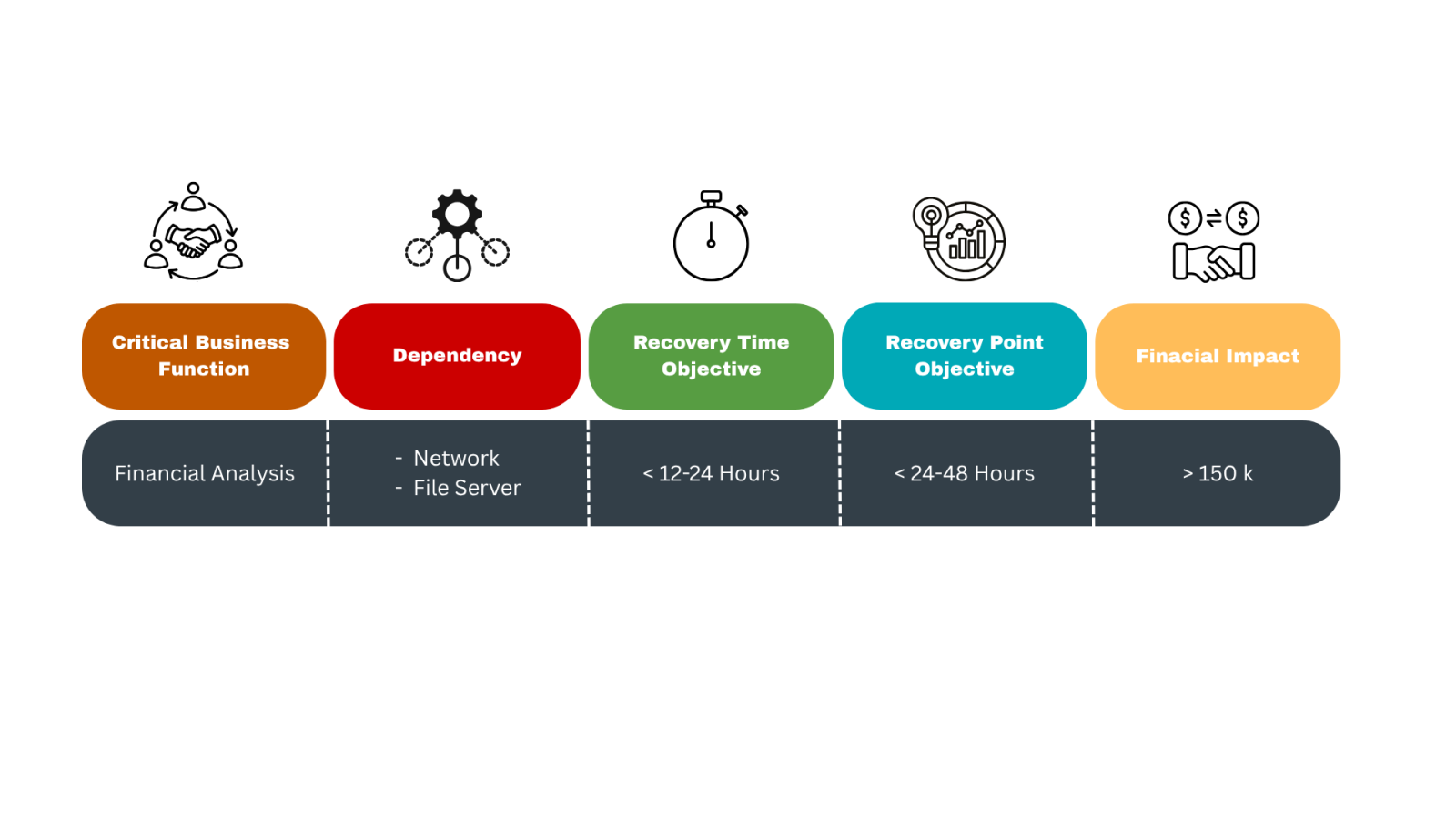
A Business Impact Analysis (BIA) is the process used to identify and evaluate a department’s critical functions, determine the consequences of disruption, and establish recovery priorities. Through the BIA, departments assess how interruptions would affect operations, service delivery, compliance obligations, research activities, and other mission-essential responsibilities, while also documenting the personnel, technology, facilities, vendors, and other dependencies required to support those functions. The BIA helps units define realistic recovery objectives, including how quickly a function must be restored and what level of interruption can be tolerated, providing the foundation for informed continuity planning and resource prioritization.
Business Continuity Plans
Business Continuity Plans are department-level plans developed by individual colleges, schools, and units to document how they will maintain or restore their critical functions following a significant interruption. These plans identify essential services, key personnel, dependencies, alternate work arrangements, and recovery strategies needed to continue operations at an acceptable level until normal conditions can be reestablished. The key element of these plans is the Business Impact Analysis (BIA). While the UT COOP provides the overarching institutional framework, Business Continuity Plans translate that guidance into actionable, function-specific procedures that reflect the unique operational needs of each unit.
Business Continuity Plans are required for all mission-critical departments at UT (a full list of said departments is maintained in the UT COOP), however it is recommended that all colleges/schools/units develop and maintain a BCP for their critical functions. The Office of Emergency Management is a resource to help all groups on campus to develop a BCP and can be contacted at emergencymanagement@austin.utexas.edu for more information.
Continuity of Operations Plan
The UT COOP is the foundational continuity plan for the entirety of campus. This plan establishes the institutional framework for how the university coordinates continuity activities during significant interruptions to operations when critical functions are affected. It defines high-level roles, responsibilities, authorities, and coordination expectations that support continuity planning across the institution, while also guiding mission-critical units in the development and activation of their own continuity plans. In practice, the UT COOP helps ensure the university can sustain essential functions, prioritize limited resources, and support an organized transition from incident response to operational recovery.
The Office of Emergency Management is responsible for the development and annual maintenance of the UT Continuity of Operations Plan.
Testing and Exercising
Testing and exercising are essential to ensure continuity plans remain practical, current, and actionable. Departments should periodically review their plans, validate key assumptions, and participate in exercise formats such as:
- Tabletop Exercise
- Functional Exercise
- Full-Scale Exercise
These activities help identify gaps, improve coordination, strengthen familiarity with continuity responsibilities, and support ongoing updates to plans as organizational needs, personnel, technologies, and risks evolve.
The Office of Emergency Management hosts regular exercises testing the UT COOP through the Business Continuity and Disaster Recovery Council and may assist in developing continuity exercises for individual colleges, schools, and units upon request.